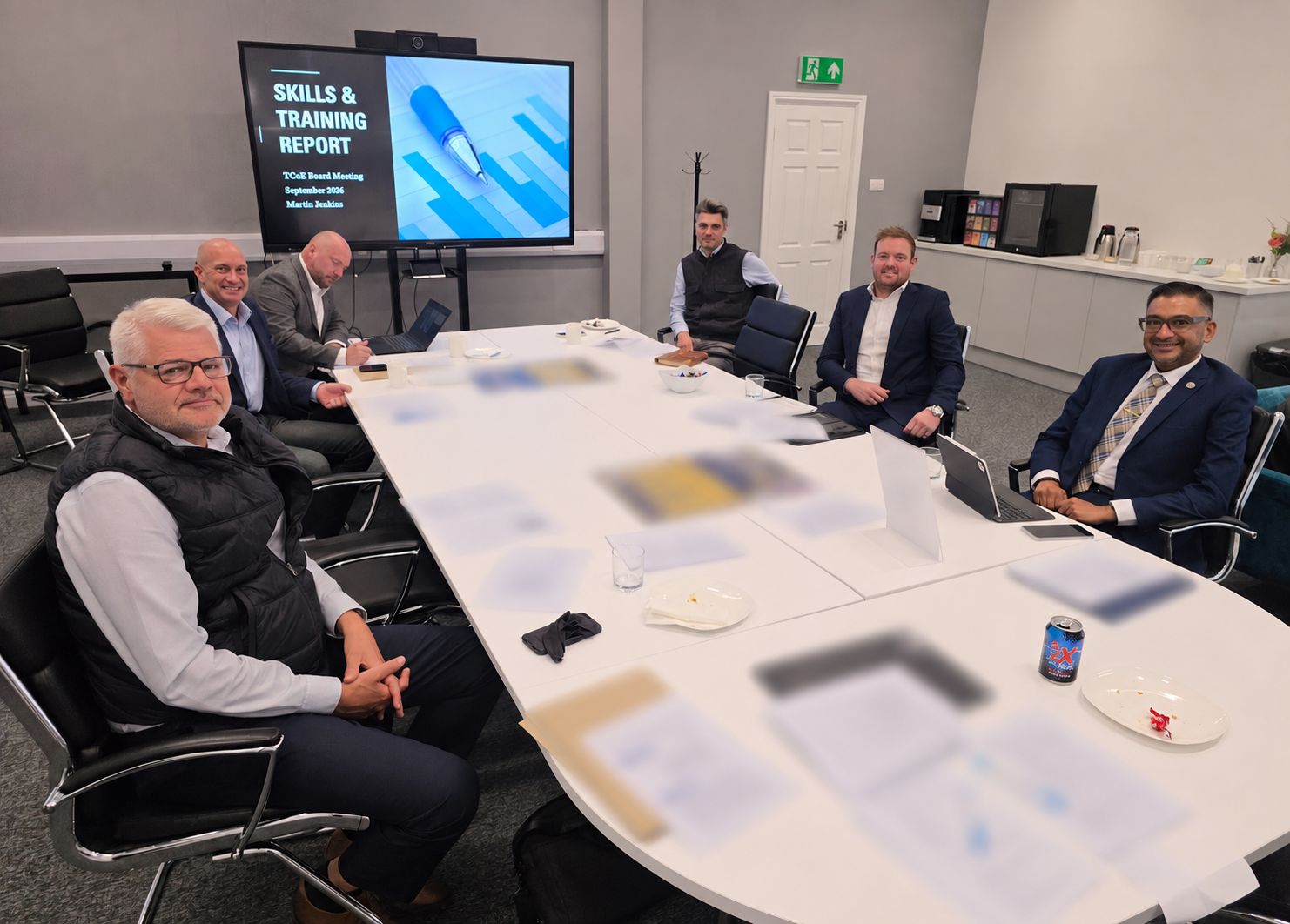
 When people talk about the future of British manufacturing, the conversation usually centres on automation, AI and emerging technologies. For Shahban Aziz, Managing Director of the Textile Centre of Excellence, however, the UK’s greatest competitive advantage lies in the people on factory floors who turn innovation into reality.
A National Voice on Skills
Before joining the Textile Centre of Excellence, Shahban established himself as one of the UK’s leading figures in skills and apprenticeships.
He held senior leadership positions at BPP and Kaplan, two of the country’s largest apprenticeship providers, before contributing to national skills policy through the Institute for Apprenticeships and Technical Education (IfATE – now Skills England), where he advised ministers on the £2.7 billion of apprenticeship funding.
Across his career, he has helped shape hundreds of apprenticeship programmes, connecting employers with the talent they need while creating meaningful career opportunities for tens of thousands of learners. For Shahban, apprenticeships have never been simply about education, they are one of Britain’s most important investments in future productivity and economic growth.
Seeing the Bigger Picture
Like apprenticeships, textiles has long been a misunderstood sector. Joining the Textile Centre of Excellence brought together Shahban’s passion for skills with one of Britain’s most innovative industries.
Working alongside world-class manufacturers, schools, universities and research partners, he has championed the role textiles plays across creative industries, aerospace, life sciences, healthcare, defence, automotive and sustainable manufacturing.
Projects involving advanced technical textiles – including advanced 3D carbon fibre weaving used on key defence contracts – have reinforced his belief that the sector deserves far greater recognition for its contribution to the Industrial Strategy.
Building Partnerships That Matter
Collaboration has become a hallmark of Shahban’s leadership. The Textile Centre of Excellence has grown its membership from 70 organisations to more than 120, while establishing new strategic partnerships that strengthen innovation, research and workforce development. Apprenticeship numbers continue to rise, with distinction rates are setting the benchmark for the sector.
He believes manufacturing’s biggest challenges cannot be solved by individual organisations acting alone. Shahban is a strong advocate for UK manufacturing, ensuring the voice of industry is heard where decisions are made. He has spoken in Parliament on the impact of energy costs on manufacturers and continues to contribute to regional and national economic development through a number of leadership positions.
He serves on the Mayor’s Business Board, is Co-Chair of the Creative Industries Board and is a Director of the Mid Yorkshire Chamber of Commerce and Huddersfield Unlimited.
Previously, he served as a Trustee of Eureka! The National Children’s Museum and Young Citizens, helping support organisations that equip more than 300,000 young people each year with the knowledge and confidence to become active citizens.
Across each of these roles runs a common theme: creating opportunities by connecting people, organisations and ideas.
Opening Doors
For Shahban, building a stronger manufacturing sector also means making it more inclusive.
Women remain significantly underrepresented – representing only 15% of new apprenticeship starts across engineering and manufacturing. Shahban has consistently championed initiatives that encourage more women into engineering and manufacturing, believing greater diversity is essential to the sector’s future. TCoE’s schools outreach work, supported by the Clothworkers’ Company, is helping address the ageing workforce and gender imbalance within the sector. However, much more needs to be done.
Shahban’s commitment to opportunity extends beyond traditional recruitment.
Working with partners across the criminal justice system, he is helping explore pioneering pathways that support women leaving prison to build sustainable careers in textiles – an ambition inspired by the transformational employment model pioneered by Lord Timpson. For Shahban, manufacturing has the potential not only to strengthen the economy but to change lives.
Looking Ahead
Shahban’s ambition is to position the Textile Centre of Excellence as one of the UK’s leading centres for innovation, skills and collaboration.
His vision is to support member companies by creating stronger connections between manufacturers, educators, researchers and policymakers while helping businesses adopt new technologies, develop future talent and compete globally.
Whether influencing national skills policy, championing manufacturers, building strategic partnerships or creating opportunities for people who might otherwise be overlooked, Shahban’s leadership has been defined by one consistent belief: that lasting success is built through people.
As Shahban says, “The future of UK manufacturing won’t be built by technology alone. It will be built by people, partnerships and a shared commitment to innovation.”